My slow day along the water: Dolmabahçe Palace, the Bosphorus cruise, and dinner at Chimney Bistro
I spent an unhurried day exploring Dolmabahçe's gilded waterfront halls, cruising the Bosphorus under the bridges, and winding down at Chimney Bistro by the old palace walls.
Whenever I step off an early morning flight from Zagreb into Istanbul, my pulse instinctively adjusts to a slower rhythm. Back home in the municipal archives, decades of handling brittle eighteenth- and nineteenth-century ledgers have taught me that hurrying through layered history only leads to missed subtleties. In Croatia, we live by the word polako—slowly, gently, unhurriedly. Istanbul, despite its immense scale, rewards that exact temperament better than any place I know.
On this trip, I decided to dedicate an entire day to the city’s relationship with open water. Many travellers rush directly to the Byzantine domes of Sultanahmet the moment they drop their bags, but I wanted to trace the later chapters of imperial history along the Bosphorus first. My plan was simple: spend a quiet morning exploring the nineteenth-century splendour of Dolmabahçe Palace, board an afternoon cruise to watch the shores drift past from the deck, and return to the old city walls for a late, relaxed dinner.
Starting the morning at Dolmabahçe's gilded edge
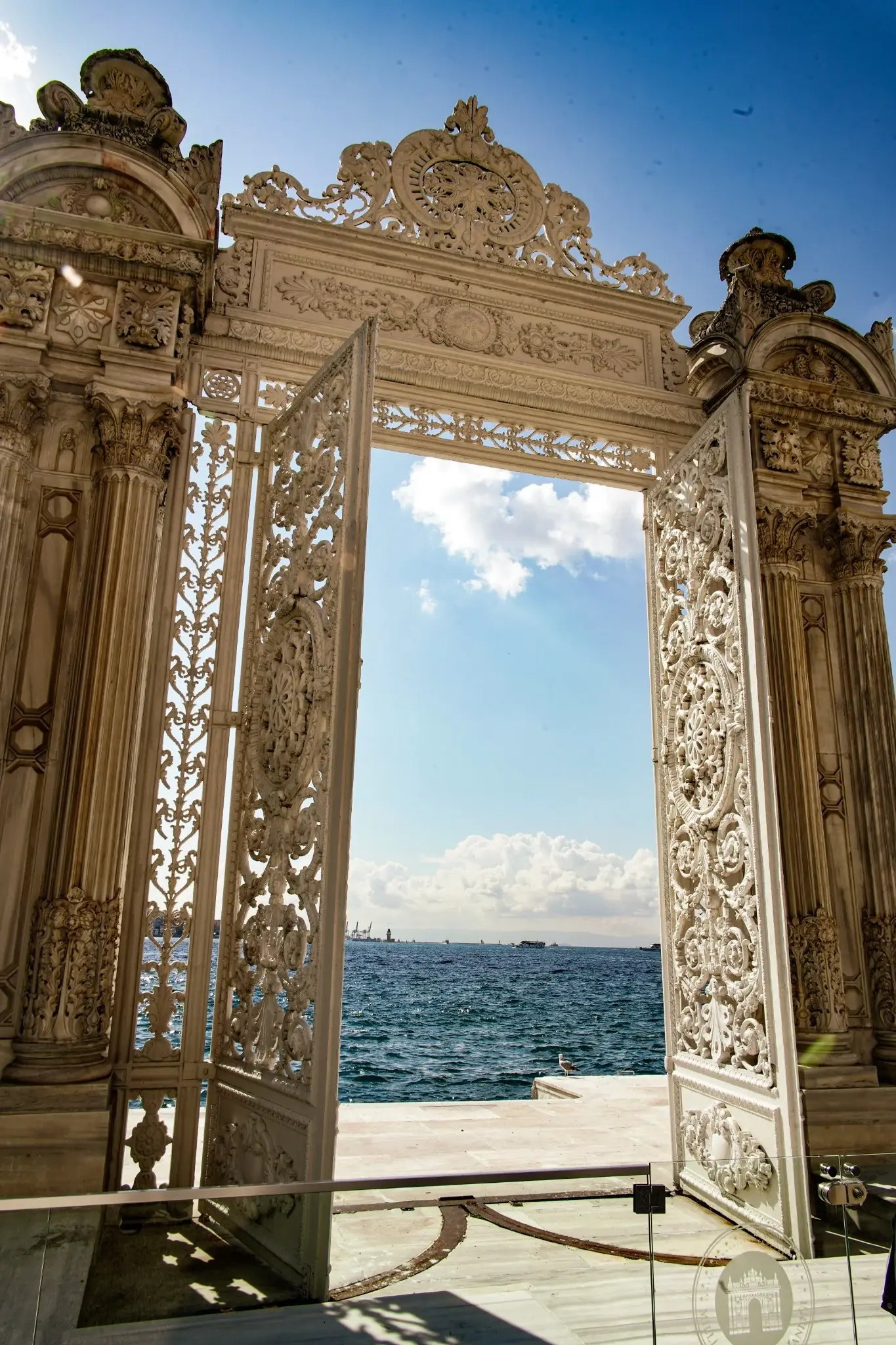
I started out by taking the T1 tram across the Galata Bridge all the way to Kabataş. Walking the final stretch along the water toward Beşiktaş in the morning light was a treat in itself. Dolmabahçe Palace reveals itself not as an ancient stone fortress, but as an elegant, neoclassical waterfront residence commissioned by Sultan Abdülmecid in the mid-nineteenth century. Walking toward the imperial gates, with their ornate carved white stone and gilded scrollwork, I was immediately reminded of the historicist architecture back home in central Zagreb, yet elevated here to a monumental imperial scale right at the sea's edge.
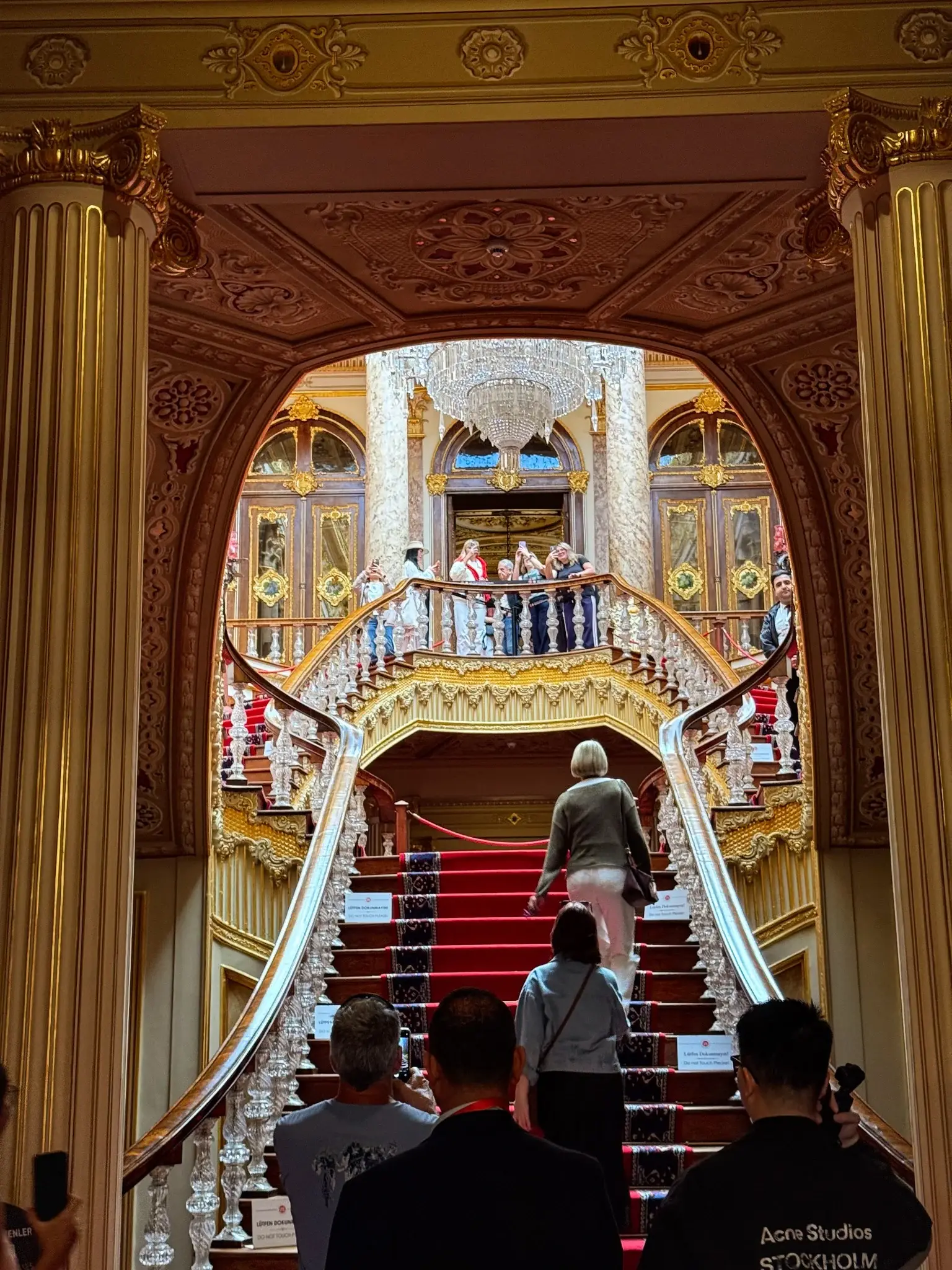
Visits inside the palace follow a clearly structured route through the Selamlık, the ceremonial state apartments where the sultans conducted state business and received foreign dignitaries. Stepping inside felt like crossing into an extravagant crossroads of Western European taste and Ottoman court ceremony. The double-horseshoe crystal staircase immediately caught my eye; daylight poured through the glass ceiling above, reflecting off the Baccarat crystal balusters and red runners. I stood at the landing with my rangefinder camera, appreciating how the Ottoman architects blended French neoclassical proportions with traditional administrative functions.
The crystal staircase and the great Ceremonial Hall
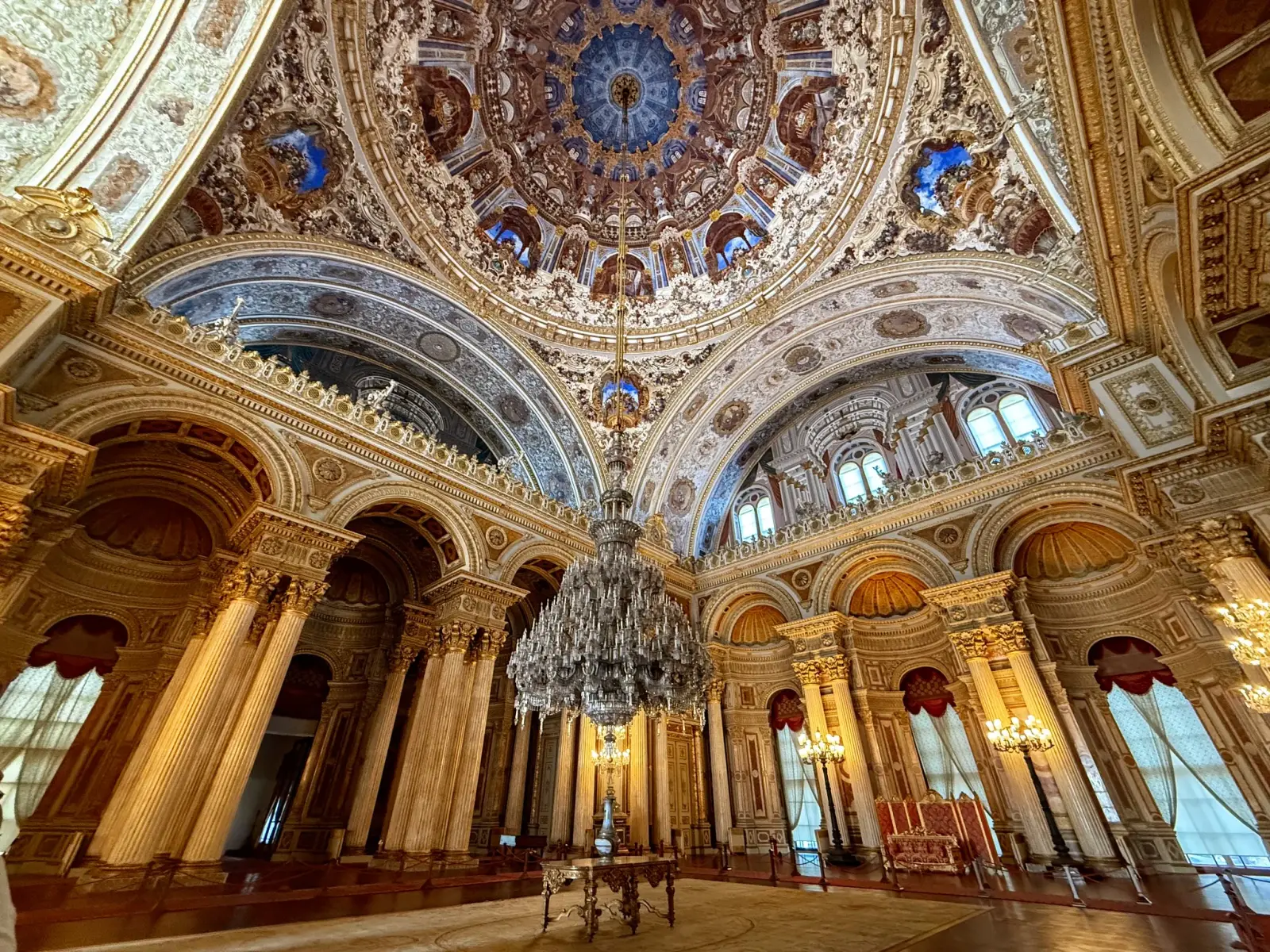
The route led deeper into the staterooms, through sprawling halls lined with parquet floors, French porcelain, and heavy silk curtains. But nothing quite prepared me for the sheer volume of the central Ceremonial Hall. Standing on the carpeted perimeter beneath the vast domed ceiling, looking up at the colossal British chandelier hanging suspended in the center, I felt the unmistakable weight of late empire.
From the ceremonial rooms, the route continued into the Harem apartments, which offered a more intimate perspective on the sultan’s family life and private quarters. What moved me most, however, was the simple bedroom where Mustafa Kemal Atatürk spent his final days in late autumn 1938. The room was hushed, preserved with dignified simplicity, and the clock beside his bed remained frozen at the exact minute of his passing. Stepping back outside into the gardens, I rested on a stone bench near the famous waterfront gates, looking through the wrought-iron grilles directly onto the blue expanse of the Bosphorus.
Tickets and visiting hoursDolmabahçe Palace
Stepping onto the boat: Istanbul from the Bosphorus
After leaving Dolmabahçe, I took my time walking back toward the ferry piers. I bought a warm, sesame-crusted simit from a street cart, leaned against the railing to watch the commuter ferries crisscross between continents, and sipped a small tulip glass of strong tea. Seeing the city from land is one thing, but Istanbul only truly makes sense when viewed from the water.
I boarded a sightseeing cruise heading up the Bosphorus toward the Black Sea. Finding a sheltered wooden bench on the upper deck with clear sightlines on both sides, I pulled out my camera and watched the European shoreline unfold behind us.
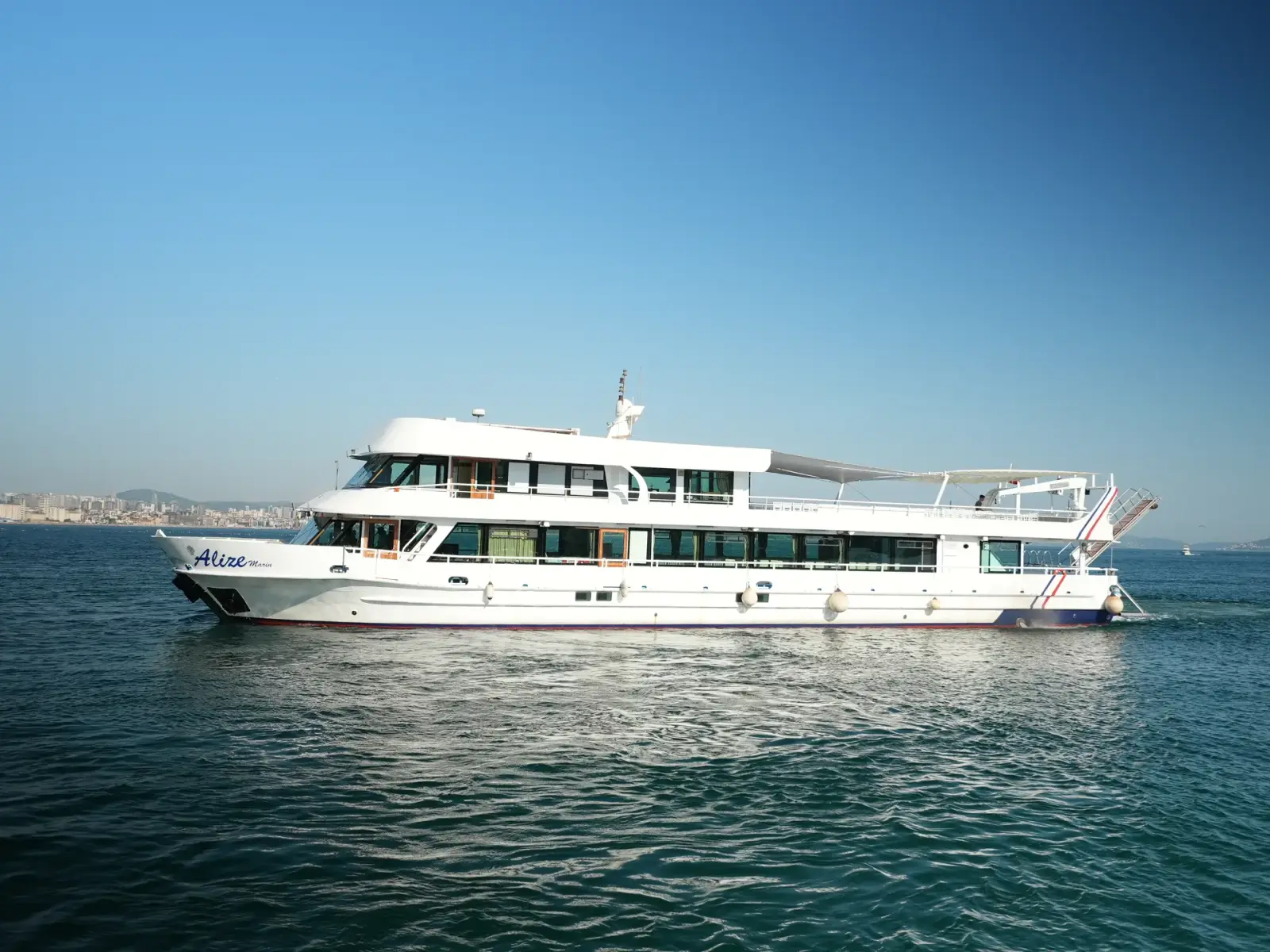
From the deck, Dolmabahçe took on an entirely different character. The palace facade stretches along the shore like a pale marble cliff, flanked by long ornamental quays where imperial caïques once moored. Cruising north, the boat glided past the grand Çırağan Palace and into the picturesque bay of Ortaköy. Seeing the small, baroque Ortaköy Mosque nestled directly beneath the soaring span of the suspension bridge remains one of my absolute favourite architectural juxtapositions in Istanbul.
Palaces, wooden mansions, and the two shores
As the boat pushed further into the strait, the European and Asian shorelines began drawing closer together. I kept my eyes on the waterfront to admire the preserved wooden mansions, known as yalı. These Ottoman summer residences, built directly over the water with private boat moorings beneath their cantilevered living rooms, have a fragile, weathered beauty that appeals deeply to anyone fond of old timber and hand-hewn joinery.
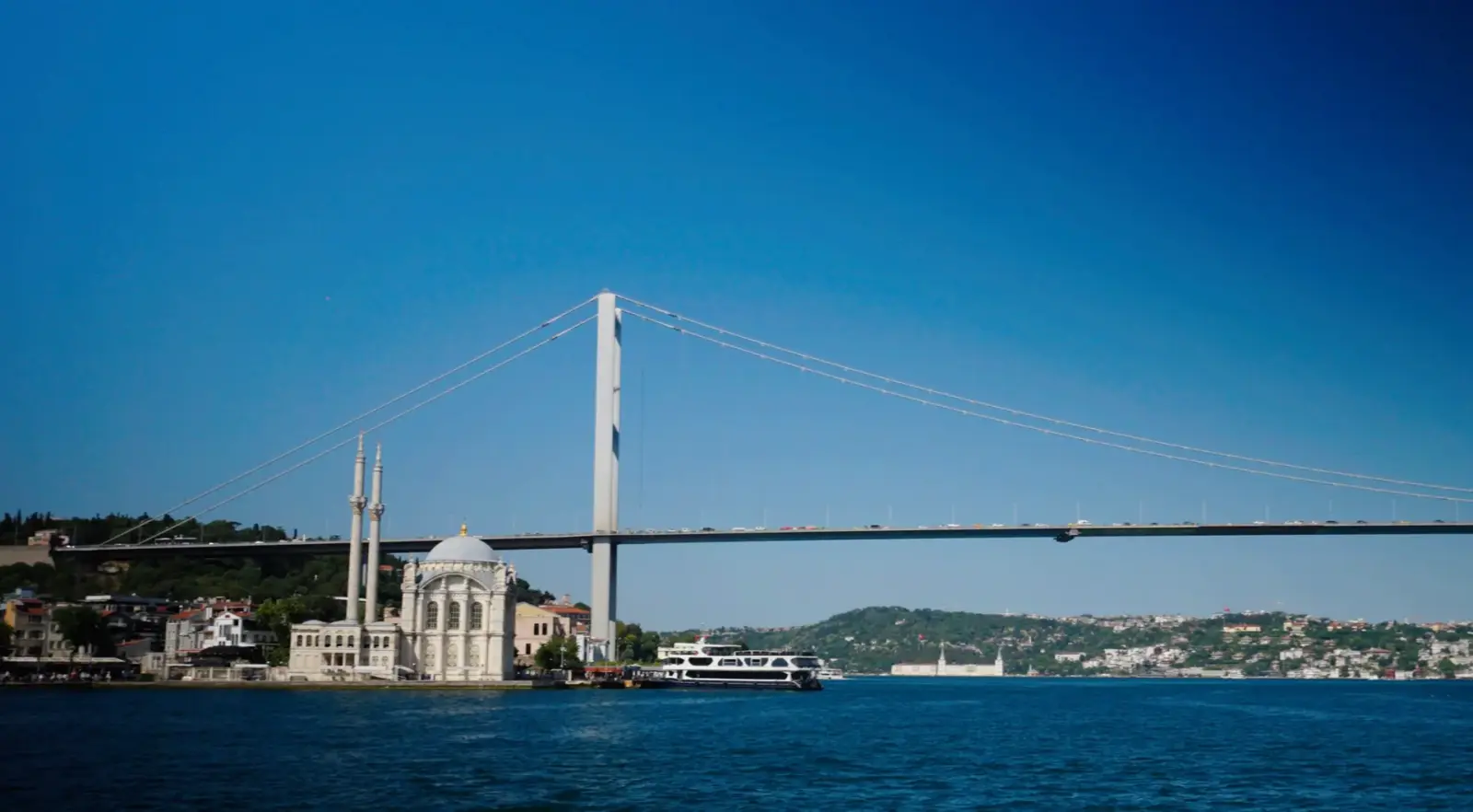
Further along the European bank, the steep grey towers of Rumeli Fortress came into sharp focus, standing firm on the narrowest point of the strait as a reminder of the fifteenth-century siege that reshaped world history. The cool sea breeze, the wheeling seagulls riding the air currents, and the steady hum of the engine made for an effortlessly calm couple of hours. There was no schedule to keep, no gallery map to consult—just the quiet pleasure of watching two continents slide by in the afternoon sun.
Tickets and visiting hoursBosphorus cruise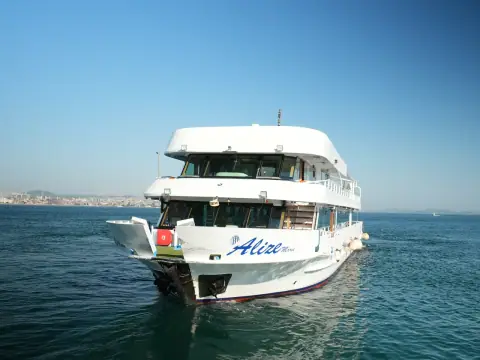
Winding down along the stone walls at Chimney Bistro
By the time the boat looped back down the strait and docked near the mouth of the Golden Horn, late afternoon had settled over the city. I was pleasantly worn out from the sea air and several miles of walking. Rather than staying down by the busy port terminals, I hopped onto the tram and rode it back up the hill to Sultanahmet.
I turned off the main square into Soğuk Çeşme Sokağı, an enchanting, narrow cobblestone lane that hugs the high stone curtain wall of Topkapı Palace. The street is lined with restored Ottoman timber houses, completely shielded from the modern tram traffic. Tucked right into this quiet pocket is Chimney Bistro, a spot that has become one of my regular evening sanctuaries on the peninsula.
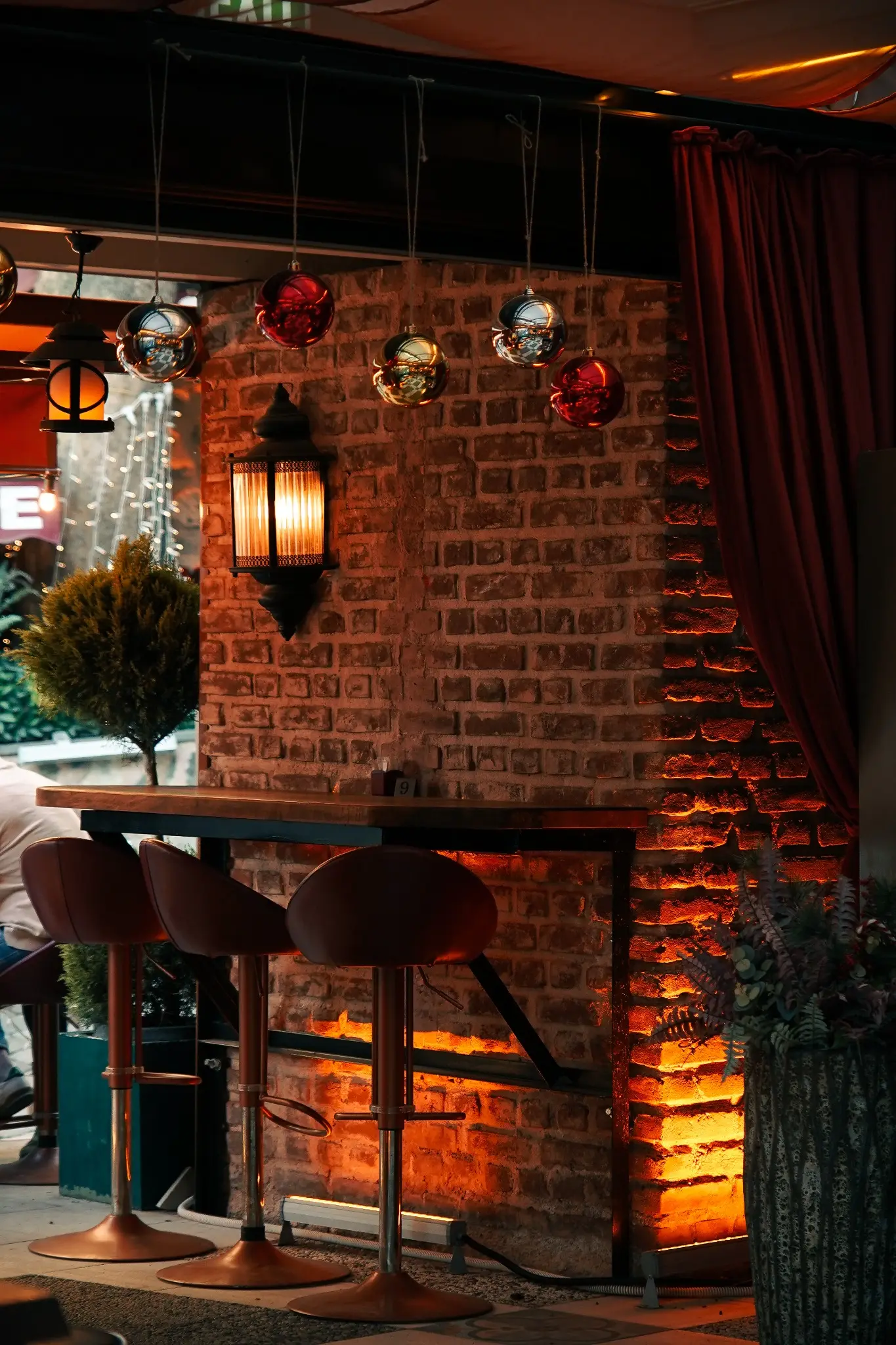
I walked in and found a seat beneath the open roof, right where the breeze drifted across the warm, exposed brickwork. The atmosphere here is relaxed and unpretentious—a welcome contrast to the louder tourist spots closer to the tram stops. I ordered their Chimney Combo, which gave me a freshly baked beef pide and a glass of dry Turkish red wine.
The pide arrived piping hot from the oven, with a crisp, blistered crust and a rich, well-seasoned filling that felt deeply comforting after a day outdoors. I sat there for over an hour, refilling my glass, jotting down notes about the day’s photographs in my small pocket journal, and listening to the quiet murmur of conversations around the bar. It was the perfect, grounded conclusion to a day spent chasing imperial scale along the water.
Book a table and the meal comboChimney Bistro, Sultanahmet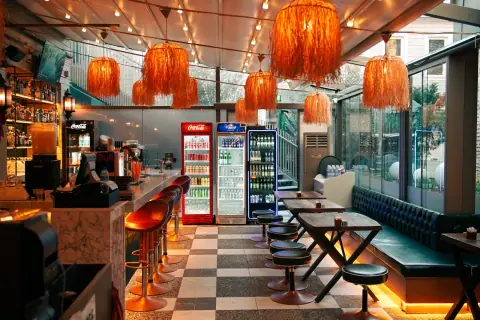
What I would do the same next time
- Anchor the morning at Dolmabahçe: Visiting the palace first gave me ample time to walk through the Selamlık, the Ceremonial Hall, and the Harem without looking at my watch.
- Take the boat right after the palace: Seeing Dolmabahçe and Ortaköy from the water immediately after walking through their grounds gave me a completely coherent perspective on how the sultans lived along the strait.
- Stick to the upper deck on the cruise: Bundling up against the breeze and claiming an outside seat on the boat rewarded me with unobstructed views and great angles for photography.
- Reserve dinner ahead near the palace walls: Booking the Chimney Combo beforehand made finishing the evening entirely effortless; I arrived in Sultanahmet knowing a quiet table by the historic walls was waiting for me.